The question we are asked more than any other is not about avalanche safety, or fitness, or whether the Chugach is too steep. It is quieter than that, and it usually arrives near the end of a phone call: can I come on my own?
In July 2026, Travel + Leisure published a first-person account by journalist Jen Murphy that answers it better than we can. She spent five years trying to organise a heli-ski trip with friends. Childcare, work and money kept collapsing the plans. Eventually she stopped waiting for the group to materialise and booked a single spot with us.
The fear is not the skiing
Murphy is a lifelong snowboarder who moved from New York to Colorado and progressed into backcountry riding. She was not worried about the descents. What worried her, by her own account, was the social arithmetic: being the least experienced person in a group of strangers, on a trip they had saved years for. Being the weak link among friends is survivable. Being the weak link among strangers felt different.
We hear that specific worry constantly, and it is worth taking seriously rather than waving away. It is not vanity. It is the reasonable fear of paying a great deal of money to spend a week apologising.
How groups are actually assembled
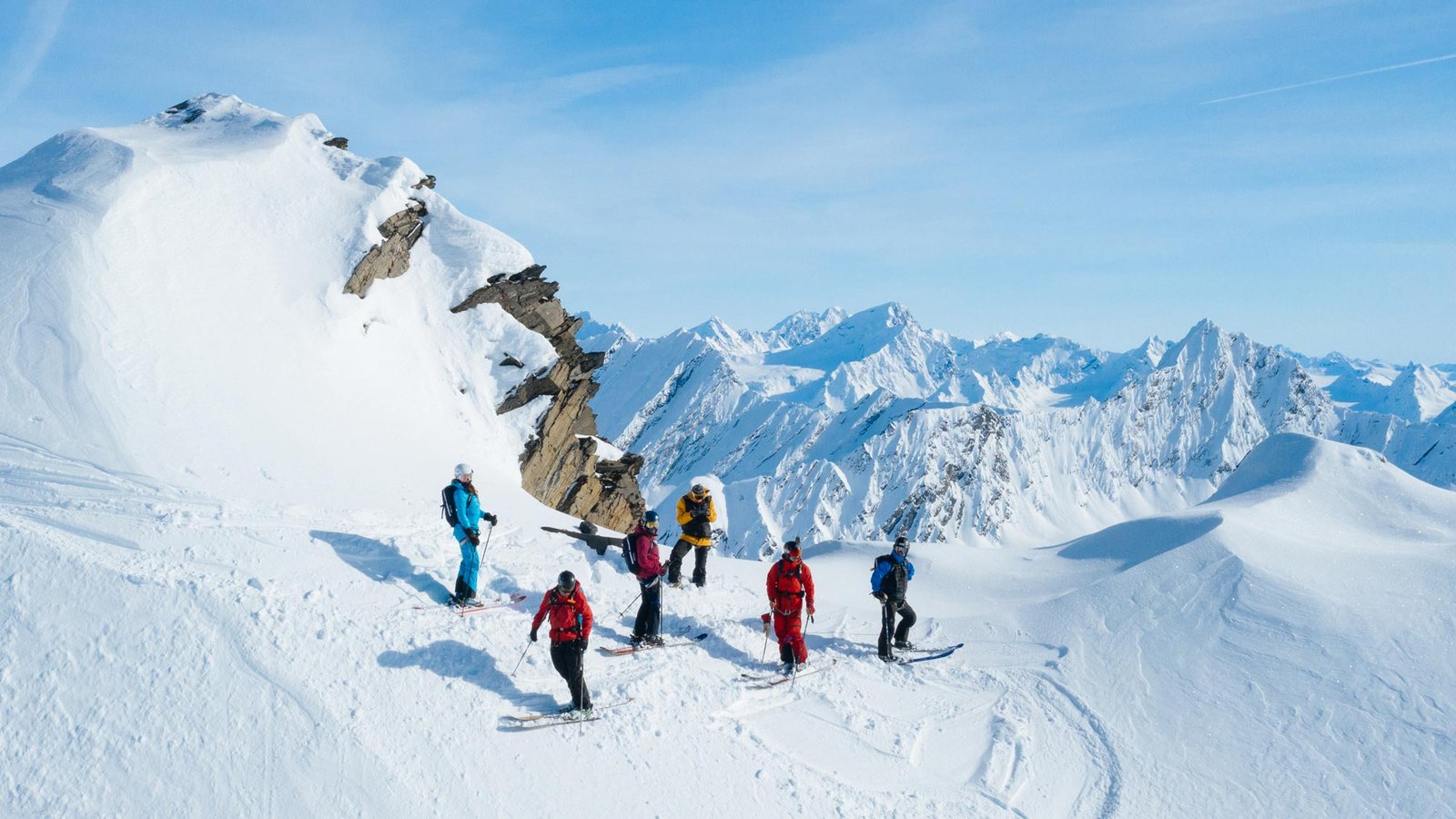
Before the season starts, we sort guests into groups by ability and by temperament - and the second matters as much as the first. Two riders of identical skill can want completely different weeks: one wants to lap as much vertical as physically possible, the other wants to stop on every ridge and look at the view. Put them together and both leave slightly disappointed.
This is also why solo bookings work. A guest arriving alone is easier to place well than a fixed group of four with mismatched appetites, because we can put them exactly where they fit.
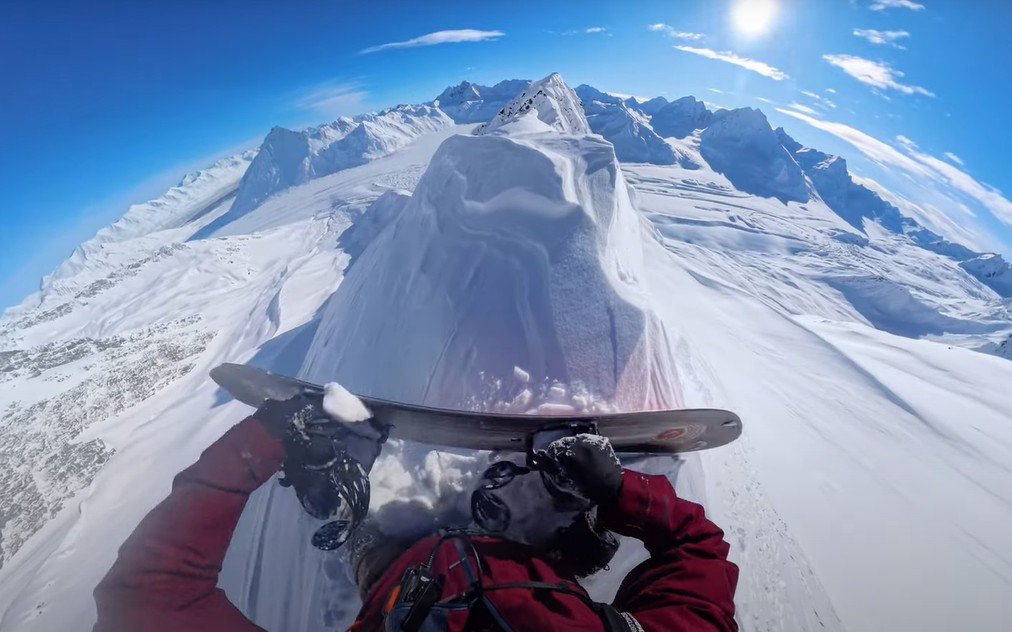
“It is pretty hard to spot skill differences on a 3,000-foot vertical slope.”
That line is doing more work than it appears. In steep Alaskan terrain, riders descend one at a time while the rest of the group watches from a safe vantage. Nobody is queuing behind anyone. Nobody is being followed down. The rhythm of the day removes most of the friction that ability gaps create at a resort - and the runs are long enough that style differences stop registering.
What a guide actually does with a mixed group
Guides choose terrain for the least experienced rider in the group, then build from there as the week progresses. Murphy describes exactly this: her guide, Brooke Edwards, extended their objectives day by day. She did not match the airtime of the two snowboarders she was paired with - two friends from Utah - and by her account it never became an issue for anyone except, briefly, herself.
That progression is the point. Guests routinely finish the week riding lines they would have declined on day one, not because they improved dramatically in six days, but because the terrain was introduced in the right order.
The other half of the week: the lodge
Heli-skiing is a week, not a day, and roughly half of it happens indoors. Guests eat together in the evening with their guides, which is where groups turn into something else. Murphy left with contacts, an ongoing friendship with her guide, and trips together in Japan and Alaska afterwards.
The underrated advantage of arriving alone is that you owe nobody your time. If you want to spend a morning by the fire with a book while everyone else goes ice climbing, no one has to be consulted. Solo guests tend to get both: company when they want it, and none when they do not.
Down days
The helicopter does not fly every day. When weather holds the fleet on the ground, guests ski-tour, ice climb, kite ski, use the lodge, or do nothing at all. Down days are the moments when a week with strangers either becomes tedious or becomes the reason people come back - which is another argument for matching groups on personality rather than ability alone.
Frequently asked questions
- Will I be charged a single supplement?
- No. A Joining a Group membership is priced per person and includes a room at the lodge. There is no penalty for travelling on your own.
- What if my group turns out to be much stronger than me?
- Guides select terrain for the least experienced rider in the group and progress from there. In steep terrain riders descend one at a time, so nobody is held up behind anyone. If a group is genuinely mismatched, we move people between groups during the week.
- Do I need to be an expert to come alone?
- No. Any confident advanced skier or rider can heli-ski the Chugach. What matters is comfort on ungroomed snow and steep pitches, not the ability to ride the most extreme lines in the range.
- How much does it cost to join a group?
- A Joining a Group membership starts at $8,500 for the week, all-inclusive: lodging, all meals, professional guiding and the flight hours in your package.
- How far in advance should I book a solo spot?
- Single spots in existing groups are the first to fill and the hardest to predict. Contact us as early as you can, and tell us your ability honestly - it is the single most useful thing you can give us for matching.